- Home
- ***Myung's Data Recovery Training ***
- Myung's Partner
- Myung's CCTV Recovery training
- Myung's logical Recovery Training
- Myung's Physical Recovery Training
- Myung's Digital forensic training
- Myung's SSD Recovery Training
- Myung's Smart Phone Recovery Training
- Myung's Basic Electronics Training
- Recovery Tool-PC3000
- Recovery Tool-PC3000 Mobile
- Recovery Tool-PC3000 Portable
- Recovery Tool-DFL
- WD Head Swap Doner
- Seagate Head Swap Doner
- Hellium HDD Recovery
- Dolpin Recovery Tool
- Dual Actuator HDD
- Common RAID Problem
- Recovery Software Market
- Recovery Tools Market
- Flash Tools Market
- Forensic Tools Market
- Duplicator Market
- Write Blocker Market
- Eraser Market
- Bitlocker Tools Market
- WindowsToGo Market
- [Electric Car Battery]
- [LCD Repairing Alliance]
- Members
- N.Am
- FE Asia
- W.Eu
- S.Eu
- N.Eu
- SW Asia
- SE Asia
- E.Eu
- S. Am
- Oce
- M.East
- Africa
- CIS
Home
- ***Myung's Data Recovery Training ***
- Myung's Partner
- Myung's CCTV Recovery training
- Myung's logical Recovery Training
- Myung's Physical Recovery Training
- Myung's Digital forensic training
- Myung's SSD Recovery Training
- Myung's Smart Phone Recovery Training
- Myung's Basic Electronics Training
- Recovery Tool-PC3000
- Recovery Tool-PC3000 Mobile
- Recovery Tool-PC3000 Portable
- Recovery Tool-DFL
- WD Head Swap Doner
- Seagate Head Swap Doner
- Hellium HDD Recovery
- Dolpin Recovery Tool
- Dual Actuator HDD
- Common RAID Problem
- Recovery Software Market
- Recovery Tools Market
- Flash Tools Market
- Forensic Tools Market
- Duplicator Market
- Write Blocker Market
- Eraser Market
- Bitlocker Tools Market
- WindowsToGo Market
- [Electric Car Battery]
- [LCD Repairing Alliance]
Lightning remains to be another source of harm to cables; that is, nonetheless, so readily guarded against that we now not hear of injury from this cause: it is claimed to have destroyed three cables. I desire to jot down with nice respect for the opinions of the proficient males who urge the adoption of mild cables; it is my special obligation to weigh nicely and without prejudice all they must advance; but I believe a cautious investigation into the experience and practice of the final twenty years establishes conclusively that all gentle cables have been brief-lived, and that every one heavy cables have continued working, usually underneath most adversarial situations. We have many reasons to affirm the belief that a submarine cable, manufactured and laid with strict consideration to all recognized principles, could also be considered a substantial property, more likely to final for any size of time; for there is no proof whatever upon file which reveals any decay of the insulating medium or copper conductor of a effectively-manufactured cable, i.
As a gentle cable, to be manufactured in a great hurry, and laid to fulfill some emergency, it has a good deal of advantage, but for a deep-sea cable I'm of opinion that it could be found too incomplete and unfinished, and that difficulties would be experienced in laying which aren't at once foreseen, and that there could be no sturdiness even if successfully laid. It may be argued that cheaper strategies of laying wires could also be devised; but the expertise of forty years has led frequently to extra and more expensive systems. I believe this economic system can be at the expense of security, and that the cable of the future will likely be even heavier, extra excellent, and extra costly, than the cable of the current day.-Abstract of Address before the Statistical Society. We are now and again startled by the announcement that light cables are to be most well-liked to the current iron-clad sort, and the article of this investigation has been to find what information there are to justify any choice to 1 form of cable over one other. In England and on the Continent there has at all times been a robust need to have a component, no less than, of the electric wires underneath-ground.
One experienced gentleman in his proof stated these cables were "akin to no person should have laid in deep water." It's enough at current to know that they've failed from neglect or inexperience, and that they, among other failures, have established the ideas which have since insured success. The Red Sea and Indian cables are stated to have been imperfectly manufactured and laid too taut, however they were not examined beneath water from the time of manufacture until they were placed at the underside of the sea, and this one grand omission, largely resulting from inexperience, is enough, without the recriminatory points, to condemn to loss and failure any cable no matter. These and lots of other examples have established the principle that no cable must be laid with out first obtaining an accurate survey of the method to the coast and landing-locations, with accurate soundings over the supposed route, and as a lot information as potential of the nature of the underside. The first cable ever manufactured with due regard to the principle of careful supervision, testing under water, and being retained quietly in that situation till it was laid, was the Malta and Alexandria cable, laid in 1861. This cable was submerged in too shallow water, for a lot of miles in much less depth than 20 fathoms; the end result was the frequent recurrence of fracture from being rolled about by the surf, and yet this cable was only finally abandoned final 12 months; not because it couldn't be stored in restore, but because it was too expensive to keep in order.
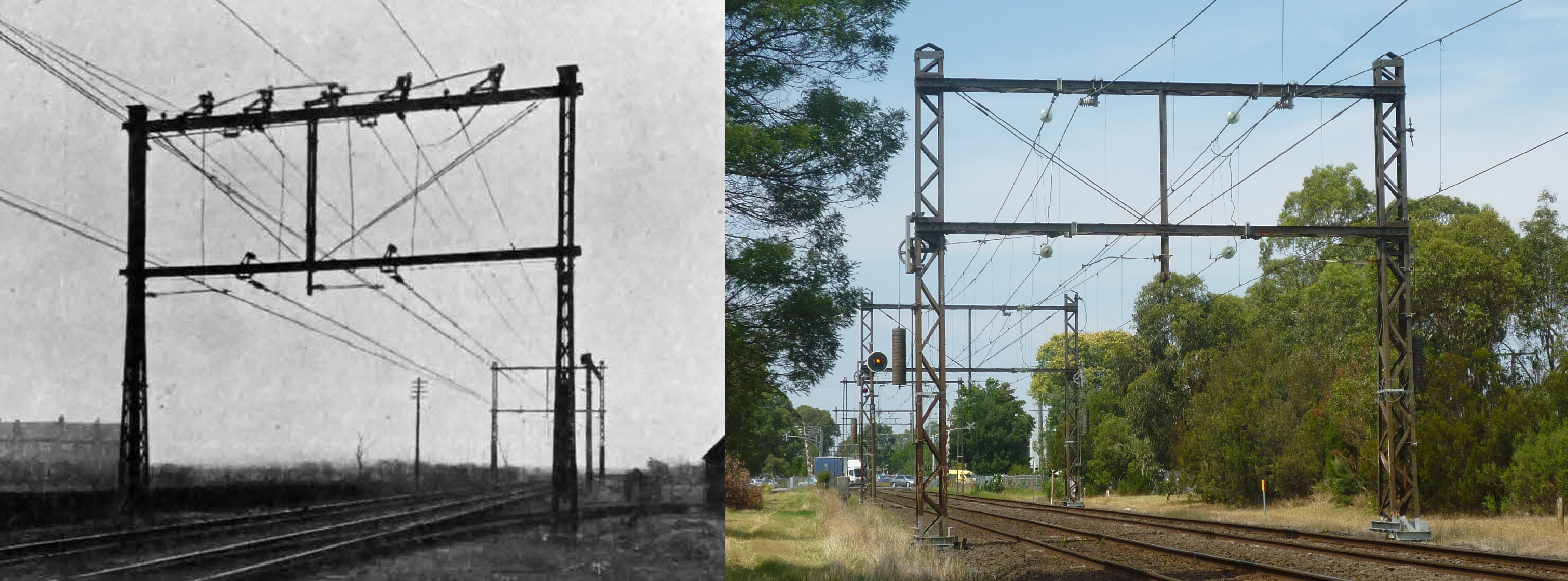 Multiply each precaution which shall enhance the energy and keep that energy intact so long as potential. 500 fathoms, and a bottom of sand or mud; but, as this can't all the time be secured, nothing must be omitted in the path of energy and quality. The recovery is then solely attainable by the strength of the external wires. To obtain regular running it needs to be made so long as potential. Where a present exists, what is electric cable a position should be sought for as far removed from it as potential. On a tramway labored on the overhead precept current is provided to the vehicles by two overhead conductors or wires. These minute defects should, however, kill the cable in kind of time, and the precept is established that each inch must be tested in course of manufacture, and rejected if there is any irregularity of condition to cause suspicion. There may often be minute defects in the core itself, or a barely defective splice which may scale back the electrical situation of a comparatively short size; this may increasingly simply be raised above the typical commonplace required by the contract, by the next length being more rigorously manufactured. London and the larger provincial towns adopted the usual gauge of four ft.