English
- Home
- ***Myung's Data Recovery Training ***
- Myung's Partner
- Myung's CCTV Recovery training
- Myung's logical Recovery Training
- Myung's Physical Recovery Training
- Myung's Digital forensic training
- Myung's SSD Recovery Training
- Myung's Smart Phone Recovery Training
- Myung's Basic Electronics Training
- Recovery Tool-PC3000
- Recovery Tool-PC3000 Mobile
- Recovery Tool-PC3000 Portable
- Recovery Tool-DFL
- WD Head Swap Doner
- Seagate Head Swap Doner
- Hellium HDD Recovery
- Dolpin Recovery Tool
- Dual Actuator HDD
- Common RAID Problem
- Recovery Software Market
- Recovery Tools Market
- Flash Tools Market
- Forensic Tools Market
- Duplicator Market
- Write Blocker Market
- Eraser Market
- Bitlocker Tools Market
- WindowsToGo Market
- [Electric Car Battery]
- [LCD Repairing Alliance]
- Members
- N.Am
- FE Asia
- W.Eu
- S.Eu
- N.Eu
- SW Asia
- SE Asia
- E.Eu
- S. Am
- Oce
- M.East
- Africa
- CIS
Home
- ***Myung's Data Recovery Training ***
- Myung's Partner
- Myung's CCTV Recovery training
- Myung's logical Recovery Training
- Myung's Physical Recovery Training
- Myung's Digital forensic training
- Myung's SSD Recovery Training
- Myung's Smart Phone Recovery Training
- Myung's Basic Electronics Training
- Recovery Tool-PC3000
- Recovery Tool-PC3000 Mobile
- Recovery Tool-PC3000 Portable
- Recovery Tool-DFL
- WD Head Swap Doner
- Seagate Head Swap Doner
- Hellium HDD Recovery
- Dolpin Recovery Tool
- Dual Actuator HDD
- Common RAID Problem
- Recovery Software Market
- Recovery Tools Market
- Flash Tools Market
- Forensic Tools Market
- Duplicator Market
- Write Blocker Market
- Eraser Market
- Bitlocker Tools Market
- WindowsToGo Market
- [Electric Car Battery]
- [LCD Repairing Alliance]
Replacing a boiler is one of the bigger household spends most homeowners make, and it is one of the ones with the most sales pressure and the least clear information. A quick search online turns up manufacturer marketing, comparison sites paid for by the manufacturers, and installer websites that all recommend the boilers those installers make the most margin on. Cutting through the noise takes a few minutes but saves years of hassle.
The first thing to think about is not which brand but which type. In most Bournemouth homes the choice is between a combi boiler, which produces hot water on demand and does not need a hot water cylinder, and a system boiler, which heats water into a cylinder in the airing cupboard. Combis suit smaller households and homes with one bathroom because they simplify the pipework and reclaim cupboard space. System boilers make more sense in larger households, in homes with more than one bathroom used simultaneously, and in properties with poor incoming water pressure, because the cylinder acts as a buffer.
Sizing is the next question, and this is where most people go wrong. The instinct is to buy a bigger boiler because bigger sounds better, but oversizing a boiler is genuinely counterproductive. A boiler that is too powerful for the property short-cycles on and off constantly, wearing components faster, running less efficiently and often being noisier. A proper heat-loss calculation, taking into account the size of the property, the insulation levels, the number of radiators and the hot water demand, gives an accurate output figure. Any installer worth using will do this before quoting, not eyeball the property from the street.
Efficiency ratings on modern boilers are almost all in the ninety-plus per cent band, but real-world efficiency depends far more on how the boiler is set up and how the system is balanced than on the number on the box. A well-installed cheaper boiler on a well-balanced system beats a premium boiler on a poorly-designed system, every time. Ask an installer how they will set the flow temperature and whether they will fit thermostatic radiator valves throughout, because those two things influence the real gas bill much more than the choice between Worcester Bosch and Vaillant.
Warranty is worth reading carefully, because there is significant variation. Most manufacturers offer between five and ten years, but the terms differ. Some warranties are only valid if the installer is on the manufacturer's approved installer scheme. Some require an annual service by a Gas Safe engineer with the service book stamped. Some cover parts only, others parts and labour. A ten-year parts-and-labour warranty on a boiler installed by an approved installer is worth several hundred pounds by itself, and it is one of the strongest reasons to be selective about who fits your boiler.
On price, be wary of quotes that seem too low. A cheap installation is often cheap because the installer is planning to skip flushing the system, reuse old radiator valves, or fit a boiler with a shorter warranty. A properly done boiler installation includes a full power flush of the existing radiators, new isolation valves at the boiler, a magnetic filter to protect the heat exchanger, and often the fitting of a smart thermostat. Everything on that list adds cost but each one extends the life of the boiler.
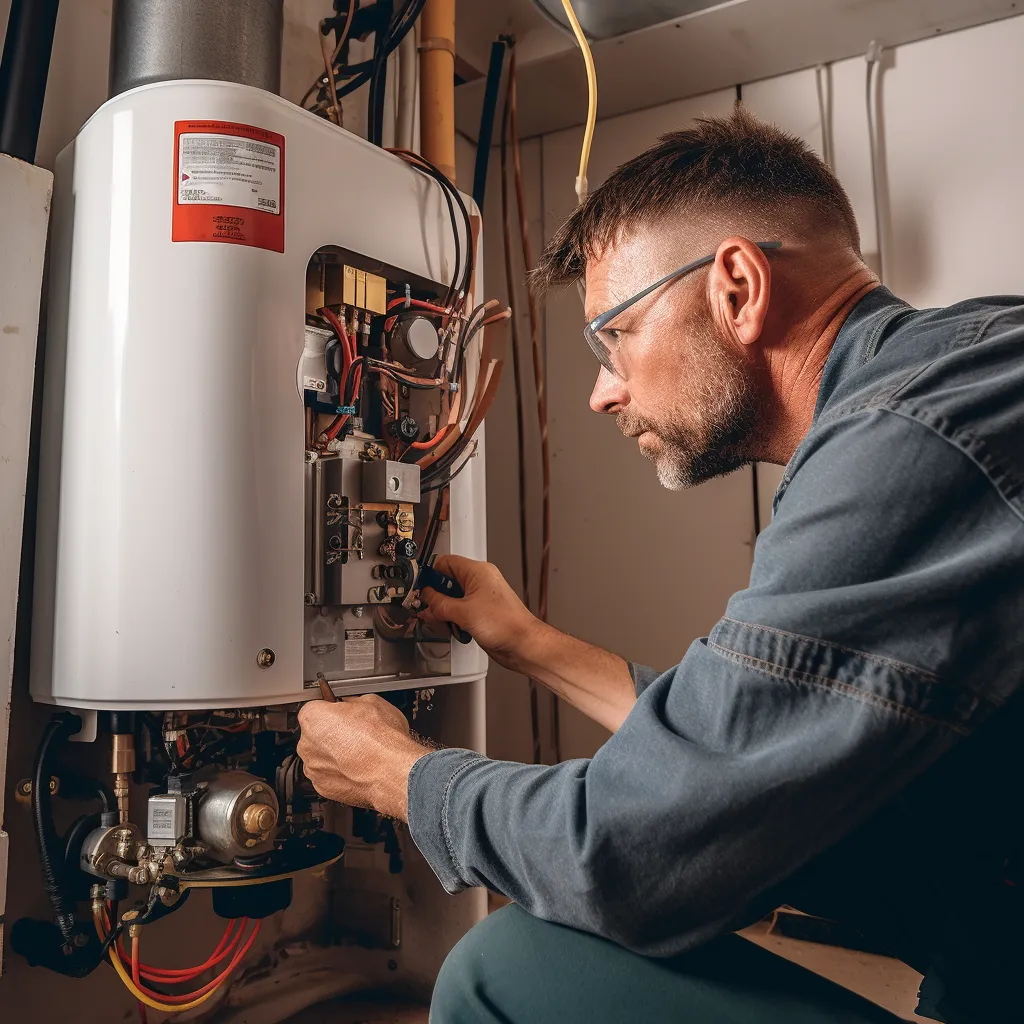 Finally, do not sign anything on the first visit. A reputable Bournemouth heating company will leave a written quote for you to think about, not pressure you to book on the day. Get two quotes if you can, three if the job is large. Ask each of them what boiler they are recommending and why, what warranty comes with it, and what is included in the price. The right answer is not always the cheapest quote, but it is almost always the clearest one.
The first thing to think about is not which brand but which type. In most Bournemouth homes the choice is between a combi boiler, which produces hot water on demand and does not need a hot water cylinder, and a system boiler, which heats water into a cylinder in the airing cupboard. Combis suit smaller households and homes with one bathroom because they simplify the pipework and reclaim cupboard space. System boilers make more sense in larger households, in homes with more than one bathroom used simultaneously, and in properties with poor incoming water pressure, because the cylinder acts as a buffer.
Sizing is the next question, and this is where most people go wrong. The instinct is to buy a bigger boiler because bigger sounds better, but oversizing a boiler is genuinely counterproductive. A boiler that is too powerful for the property short-cycles on and off constantly, wearing components faster, running less efficiently and often being noisier. A proper heat-loss calculation, taking into account the size of the property, the insulation levels, the number of radiators and the hot water demand, gives an accurate output figure. Any installer worth using will do this before quoting, not eyeball the property from the street.
Efficiency ratings on modern boilers are almost all in the ninety-plus per cent band, but real-world efficiency depends far more on how the boiler is set up and how the system is balanced than on the number on the box. A well-installed cheaper boiler on a well-balanced system beats a premium boiler on a poorly-designed system, every time. Ask an installer how they will set the flow temperature and whether they will fit thermostatic radiator valves throughout, because those two things influence the real gas bill much more than the choice between Worcester Bosch and Vaillant.
Warranty is worth reading carefully, because there is significant variation. Most manufacturers offer between five and ten years, but the terms differ. Some warranties are only valid if the installer is on the manufacturer's approved installer scheme. Some require an annual service by a Gas Safe engineer with the service book stamped. Some cover parts only, others parts and labour. A ten-year parts-and-labour warranty on a boiler installed by an approved installer is worth several hundred pounds by itself, and it is one of the strongest reasons to be selective about who fits your boiler.
On price, be wary of quotes that seem too low. A cheap installation is often cheap because the installer is planning to skip flushing the system, reuse old radiator valves, or fit a boiler with a shorter warranty. A properly done boiler installation includes a full power flush of the existing radiators, new isolation valves at the boiler, a magnetic filter to protect the heat exchanger, and often the fitting of a smart thermostat. Everything on that list adds cost but each one extends the life of the boiler.
Finally, do not sign anything on the first visit. A reputable Bournemouth heating company will leave a written quote for you to think about, not pressure you to book on the day. Get two quotes if you can, three if the job is large. Ask each of them what boiler they are recommending and why, what warranty comes with it, and what is included in the price. The right answer is not always the cheapest quote, but it is almost always the clearest one.